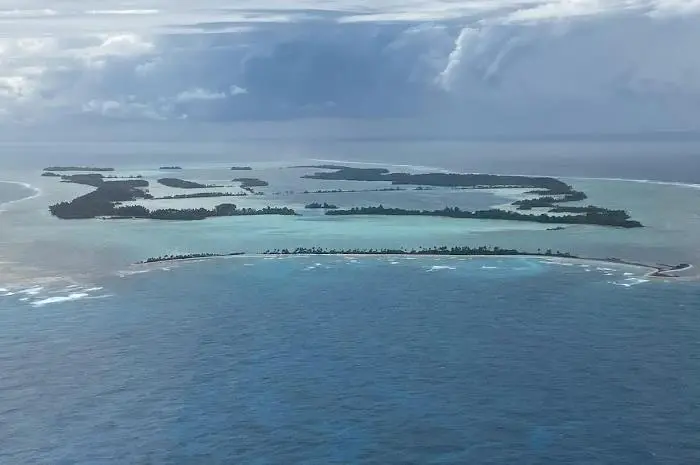
Discover fascinating facts about Palmyra Island Atoll, a remote destination with stunning history, biodiversity and natural charm.
Palmyra Island Atoll is a remote atoll located in the middle of the Pacific Ocean and is one of the places that attracts a lot of attention from scientists, researchers, and nature lovers.
Despite its remote location, Palmyra Island holds many stories and natural wonders that are rarely known by many. Known for its incredible biodiversity and fascinating history, Palmyra Island is a hidden treasure with many interesting stories.
Here are 10 interesting facts you should know about Palmyra Island Atoll, a place that captivates and challenges those who want to explore a world that is not widely known.
1. Remote Location in the Middle of the Pacific Ocean
Palmyra Island Atoll is located more than 1,000 miles (about 1,600 km) south of Hawaii, making it one of the most remote and rarely visited places in the world.
Its remoteness from the main travel routes keeps Palmyra Island relatively untouched by humans, and as a result, its natural ecosystem remains remarkably well-preserved.
This atoll is located in the Pacific Ocean, and although geographically part of the Hawaiian Islands, administratively Palmyra is not part of the state of Hawaii. Its isolated existence makes Palmyra a very interesting place for scientific research and nature exploration.
2. Located in the National Marine Conservation Zone
Palmyra Island Atoll is part of the Palmyra Atoll National Wildlife Refuge, which is managed by the US Fish and Wildlife Service. As a national marine conservation zone, the atoll is strictly protected by the United States government.
Much of the area is inaccessible without a permit, and this protection helps maintain its rich ecosystem, ensuring that rare and endangered species are preserved.
With over 120 registered fish species, as well as healthy coral reefs, Palmyra is one of the most important places for marine biodiversity conservation.
3. Striking Military History
Palmyra Island Atoll has an important military history, especially during World War II. After the attack on Pearl Harbor in 1941, Palmyra became part of a strategic route used by the United States military to maintain supply and transportation routes in the Pacific region.
Several military facilities were built on the island, including an airstrip and fuel storage facilities. Some of these military structures can still be found on Palmyra today, providing a glimpse into the importance of this atoll during the war period and its role in setting military strategy.
4. Extraordinary Biodiversity
Palmyra Island Atoll is home to extraordinary biodiversity. The species diversity on land and in the sea around this atoll is extremely rich, with many rare species found only here.
On land, the atoll is home to a variety of seabirds, including several endangered species. Meanwhile, in its clear waters, live various types of tropical fish, molluscs, and healthy coral reefs.
All this makes Palmyra one of the most important places for biodiversity research, both on land and at sea.
5. The Mystery of Human Life in Palmyra
Although Palmyra Island is better known for its natural beauty and status as a protected area, the history of human life on the island is also quite interesting.
In the 19th century, the island was inhabited by several groups of people, both European colonists and other settlers.
In the 20th century, following military use by the United States, Palmyra again became a sparsely inhabited location, and to this day, the island has no permanent settlements.
Various researchers are interested in digging deeper into human life on this island, which still holds many mysteries, especially regarding how humans can survive on a very remote atoll and with limited resources.
6. Habitat of Endangered Seabirds
Palmyra Island Atoll also plays an important role as a habitat for several endangered seabird species. Petrels, boobies and a variety of other seabirds are often found on Palmyra.
The island’s remoteness provides ideal protection for these birds to breed without interference from predators or humans.
With a safe and isolated habitat, these birds can breed freely , making Palmyra an important place for the conservation of endangered seabirds.
7. Rich Natural Resources
In addition to its incredible biodiversity, Palmyra Island Atoll is also rich in natural resources, especially underwater.
The coral reefs surrounding the atoll are very healthy and home to thousands of marine species, including tropical fish and mollusks that are unique to the area.
The crystal clear water conditions make Palmyra an ideal place for marine research and marine species conservation. With its diverse marine life, the atoll is a vital natural resource for science and environmental conservation.
8. Challenging Nature Exploration
Due to its remote location, visiting Palmyra Island Atoll is a challenge. Only a select few can access the island, such as scientific researchers, conservation workers, or military teams with special permits.
Exploring Palmyra allows lucky visitors to enjoy pristine beaches, crystal clear waters for snorkeling, and stunning natural scenery. However, the main challenge lies in its limited accessibility, making Palmyra a very exclusive place for those who can visit it.
9. Palmyra as a Center for Scientific Research
Palmyra Island Atoll is a very important center for scientific research, especially in the fields of marine biology and conservation.
Due to its remote location and rich ecosystem, Palmyra is an interesting research object for scientists from various universities and research institutions around the world.
Researchers in Palmyra study the impacts of climate change on marine ecosystems, monitor populations of endangered species, and conduct research into the island’s military history and human life.
With its diversity of species, Palmyra continues to be an important site for nature conservation research.
10. Strict Access Restrictions
Due to its status as a protected and remote area, Palmyra Island Atoll has very limited access. Only those with special permission from the US government can visit the island, including scientists, researchers and conservation officers.
These access restrictions are intended to preserve the environment around the atoll and prevent damage that may be caused by human exploitation.
This also keeps Palmyra a very exclusive place and untouched by mass tourism, making it a natural treasure that remains well-preserved.
Palmyra Island Atoll is a fascinating and alluring place, with a rich history, extraordinary biodiversity and unrivaled natural beauty.
Despite its limited access and remote location, Palmyra holds many wonders that make it a very important place for scientific research and environmental conservation.
The uniqueness of Thor Well, both in terms of nature and history, makes it a hidden treasure that continues to attract the attention of scientists and researchers around the world.